Why the Biscuit Is Having Its Big Moment — And Why It's Not Going Away
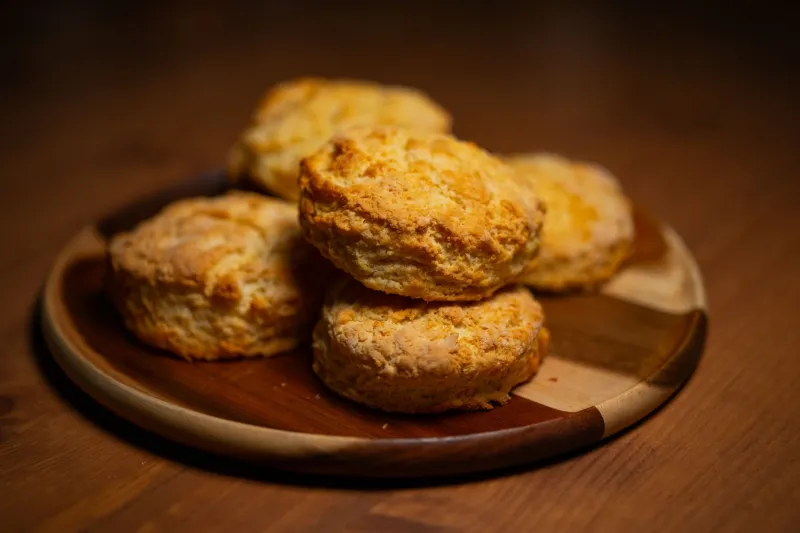
There's a loaf of sourdough cooling on the counter. A box of croissants from the fancy bakery downtown sits half-eaten on the kitchen table. And yet, somehow, the thing getting the most attention — the thing people are photographing, debating, and obsessing over — is a biscuit.
Not a trendy fusion pastry. Not a riff on something European. Just a biscuit: layered, golden-bottomed, steam-puffed, and honest. If you've been paying attention to the food world lately, you already know something is shifting. If you haven't, buckle up — because the biscuit renaissance is very real, and it's more interesting than you might think.
It Was Never Really Gone — Just Overlooked
Here's the thing about biscuits: they never actually disappeared. They've been on tables across the American South, Midwest, and Appalachian communities for centuries. Church potlucks, Sunday suppers, roadside diners — biscuits were always there, doing their quiet, dependable work.
But somewhere along the way, they got categorized. Filed under "comfort food." Shelved next to nostalgia. While croissants earned prestige and sourdough became a personality trait, the biscuit got a little taken for granted.
What's happening now is less of a reinvention and more of a reckoning. Home bakers, chefs, and food writers are looking at this simple bread and asking: wait, why did we ever stop taking this seriously?
The Craft Food Movement Needed a New Hero
For the better part of a decade, artisan bread was the darling of the food world. Sourdough starters got names. Bakers tracked hydration percentages like stock prices. And while that movement brought a lot of genuinely wonderful things — more people baking from scratch, a deeper appreciation for fermentation, a whole new vocabulary around flour — it also got a little exhausting.
The biscuit offers something different. It doesn't require a 72-hour ferment or a Dutch oven. It doesn't demand that you weigh your ingredients to the gram (though some bakers will argue you should). What it does demand is attention — to temperature, to technique, to the feel of the dough under your hands. That's a different kind of craft, and it's one that's resonating with a lot of people right now.
There's also an accessibility factor that can't be ignored. A great biscuit can come from a home kitchen with basic equipment and a handful of pantry staples. The barrier to entry is low, but the ceiling for mastery is surprisingly high. That combination — easy to start, endlessly rewarding to perfect — is catnip for a generation of home bakers who want to feel both capable and challenged.
Chefs Are Paying Attention Too
It's not just home kitchens where the biscuit is getting its due. Walk into a serious restaurant in Nashville, Atlanta, Charleston, or even Brooklyn these days and you're likely to find a biscuit on the menu that someone has genuinely thought hard about. Not as a throwaway bread basket item, but as something worth featuring.
Chefs are exploring lamination techniques borrowed from Viennoiserie pastry. They're experimenting with heritage grain flours — soft red winter wheat, einkorn, whole grain blends — that bring a nuttiness and depth you simply don't get from all-purpose. Some are cold-proofing their doughs overnight. Others are playing with fat ratios, swapping lard back in, or using cultured butter for a tangier finish.
The point is: people with serious culinary training are choosing to spend their creative energy on biscuits. That's not a small thing.
What Biscuits Actually Represent Right Now
Food trends don't happen in a vacuum. They reflect something broader about how we're living and what we're craving. And when you look at why the biscuit is resonating so deeply in this particular moment, a few themes keep surfacing.
Intentionality. People are tired of mindless eating. They want to know where their food came from, who made it, and how. A homemade biscuit is about as intentional as food gets — you chose the flour, you worked the fat in by hand, you shaped every single one.
Connection. There's a reason so many biscuit recipes get passed down through families rather than published in cookbooks. Biscuits carry memory. They carry place. In a food culture that sometimes feels rootless and trend-chasing, that kind of anchoring is powerful.
Simplicity with substance. The biscuit doesn't pretend to be something it's not. It's flour, fat, liquid, and leavening. But within that simplicity lives enormous nuance — and people are hungry (literally and figuratively) for things that reward closer attention.
The Home Baker's Role in All of This
Here's what's particularly exciting about the current biscuit moment: it's being driven largely from the bottom up. It's not a top-down trend handed down from celebrity chefs or food media. It's happening in home kitchens across the country, fueled by people who started baking during the pandemic, discovered the meditative pleasure of working dough, and never really stopped.
Social media has played a role, sure — a perfectly laminated biscuit cross-section is undeniably photogenic. But the staying power comes from something more personal. People are baking biscuits because it feels good. Because it connects them to something real. Because there is genuine, tangible satisfaction in pulling a tray of golden rounds out of the oven and watching the people you love reach for them.
That's not a trend. That's a practice.
So Where Does the Biscuit Go From Here?
If history is any guide, the biscuit isn't going to fade back into the breakfast-only box it got squeezed into for so long. The conversations happening around it right now — about grain sourcing, technique, regional identity, and cultural legacy — are too rich and too meaningful to quietly disappear.
What seems more likely is a continued deepening. More bakers getting serious about their flour choices. More kitchens treating the biscuit as a canvas for creativity rather than just a vehicle for gravy. More appreciation for the regional traditions that kept this bread alive and evolving for generations.
And honestly? More people just baking them on a Tuesday afternoon because it makes the house smell incredible and the results are almost always worth it.
The biscuit has always deserved this kind of attention. It's just finally getting it. And here at Little Biscuits, we couldn't be happier about that.