Measuring Cups Are Out: Why Serious Home Bakers Are Going Full Science Mode on Their Biscuit Recipes
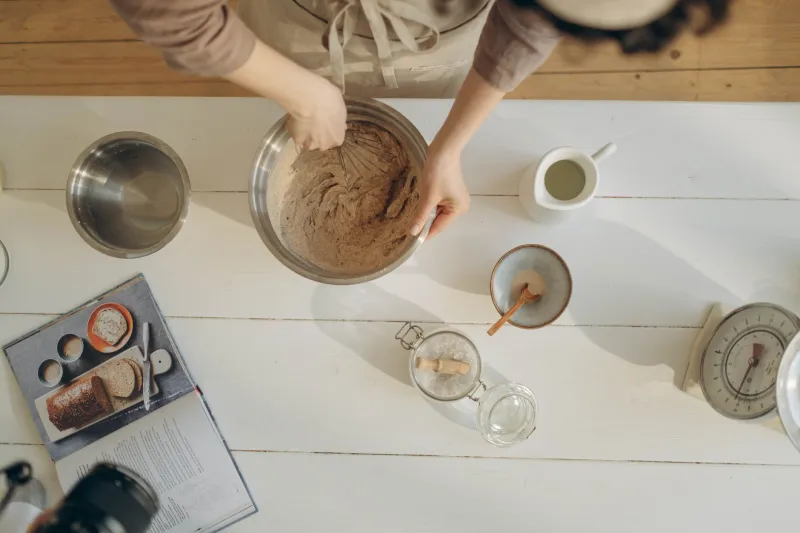
Somewhere between her third batch of dense, gummy biscuits and her fourteenth notebook entry on fat-to-flour ratios, Renata Osei had a realization. "I kept following the same recipe and getting different results every single time," she says, laughing from her kitchen in Columbus, Ohio. "That's when I figured out the problem wasn't the recipe. It was me — and my completely inconsistent measuring."
Renata is part of a quietly growing movement of home bakers who've decided that instinct and tradition, while wonderful, aren't enough on their own. They want to know. Know why biscuits puff. Know what happens when you change the hydration by three percent. Know exactly how cold the butter needs to be before it hits the dough. Armed with precision kitchen scales, baking notebooks, and sometimes full-blown spreadsheets, these hobbyists are bringing a scientific mindset to one of America's most beloved comfort foods — and the results are genuinely impressive.
The Problem With Volume Measurements
Here's something that might sting a little: your measuring cups might be lying to you. Not on purpose, but the way most of us scoop flour — dipping the cup into the bag and packing it slightly without realizing — can add anywhere from 20 to 30 percent more flour than the recipe actually intends. That's not a small difference. In biscuit baking, where the balance between flour, fat, and liquid is everything, even a small miscalculation can mean the difference between a tall, flaky beauty and a sad, squat puck.
Weight measurements, on the other hand, don't lie. A gram is a gram, every single time. That's why professional bakeries have used scales for decades, and why a dedicated segment of home bakers has finally made the switch.
"I bought a $15 digital scale off Amazon and it changed everything," says Marcus Webb, a high school chemistry teacher in Nashville who started baking biscuits seriously during the pandemic. "Once I started measuring by weight, my results were consistent batch after batch. I could actually troubleshoot because I knew every variable was controlled."
Marcus now keeps a baking log where he records not just measurements, but ambient kitchen temperature, the brand of butter he used, and even humidity levels — because yes, humidity affects how much liquid your dough absorbs.
Learning the Language of Hydration
If you've spent any time in sourdough circles, you've probably heard the term "hydration percentage" thrown around. It refers to the ratio of water (or liquid) to flour in a dough, expressed as a percentage. Sourdough bakers obsess over it. And now, biscuit bakers are starting to do the same.
Typical biscuit doughs run somewhere between 55 and 70 percent hydration, depending on the style you're going for. Lower hydration tends to produce a more crumbly, tender biscuit — think classic Southern-style. Higher hydration can create a slightly chewier, more open crumb structure. Neither is wrong. But knowing where your dough falls on that spectrum means you can intentionally adjust it rather than just hoping for the best.
Renata started mapping her hydration percentages after a particularly frustrating batch made with buttermilk from a different brand. "I realized the fat content in buttermilk varies by brand, and that was messing with my dough consistency," she explains. "So I started calculating based on the actual liquid weight and adjusting from there. It sounds nerdy, but it genuinely fixed the problem."
The Role of Fat — and Why Temperature Is Everything
Ask any biscuit scientist (yes, that's a thing now, apparently) what the most critical variable in their recipe is, and most will say the same thing: butter temperature. The flaky layers that make a great biscuit possible come from cold fat creating steam pockets as it hits the heat of the oven. If your butter is even slightly too warm, it blends into the flour rather than staying in distinct pieces — and your layers disappear.
Marcus actually uses a probe thermometer to check his butter temperature before it goes into the dough. His target: between 35°F and 40°F. "Most people just say 'use cold butter,' but cold means different things in different kitchens," he points out. "In the summer, my kitchen runs warm. What's cold enough in January might not be cold enough in July."
Beyond temperature, some bakers are digging into the type of fat they use and how it affects texture. European-style butter, with its higher fat content (around 84 percent versus the standard American 80 percent), produces a richer, more tender biscuit with slightly less water content — which means less steam, but more flavor. Shortening, on the other hand, creates a more stable fat structure that holds up better in warmer kitchens and produces a distinctly different — some say fluffier — crumb.
Knowing these differences means you can choose your fat intentionally based on the result you want, not just based on what's in the fridge.
Spreadsheets, Notebooks, and the Joy of the Experiment
Not everyone is logging data in Excel (though some definitely are). For many precision bakers, the notebook is the tool of choice — a handwritten record of every batch, every tweak, and every outcome. It's part kitchen diary, part scientific record, and entirely personal.
Jasmine Tran, a graphic designer in Portland, Oregon, started her biscuit notebook two years ago after a friend joked that she was "reverse engineering Cracker Barrel." She wasn't entirely wrong. "I had a biscuit I loved at a restaurant and I just wanted to figure out how they did it," she says. "So I started testing. Changing one variable at a time, writing down what happened, adjusting. It took maybe twelve batches, but I got there."
The one-variable-at-a-time approach is straight out of the scientific method — and it's exactly what separates purposeful experimentation from random tinkering. When you change multiple things at once, you have no idea what actually made the difference. When you change one thing — the type of flour, the folding technique, the baking temperature — you can actually learn something.
You Don't Have to Go Full Lab Mode
Here's the good news: you don't need a chemistry degree or a color-coded spreadsheet to benefit from a more scientific approach to biscuit baking. Even small shifts — swapping your measuring cups for a basic kitchen scale, jotting down notes after each batch, checking your butter temperature before you start — can meaningfully improve your consistency and help you understand why a batch worked or didn't.
Baking has always been part art, part science. The home bakers leaning into the science side aren't taking the joy out of it — if anything, they're deepening their appreciation for what's happening in that oven. Understanding why your biscuits rise, why they layer, why they brown the way they do makes every successful batch feel like a small, delicious victory.
And if you fill a notebook with failed experiments along the way? That's not failure. That's data — and data, eventually, gets you to perfect.