Ditch the Croissant: How Millennials Fell Hard for the Humble Homemade Biscuit
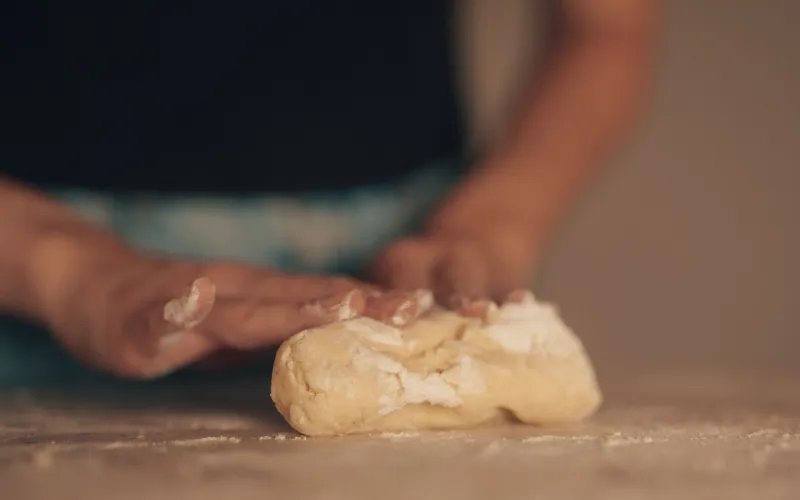
There's a moment that a lot of home bakers describe in almost exactly the same way. You're standing at your kitchen counter on a Saturday morning, hands buried in cold butter and flour, and for the first time in a long week, your brain just... quiets down. No Slack notifications. No doom-scrolling. Just dough.
That moment — and the golden, tender biscuit that comes out of it — is turning into a full-blown cultural movement. Across the country, millennials who once happily dropped $6 on a coffee shop croissant are now reaching for a mixing bowl instead. And the reasons why say a lot about where we are as a generation right now.
From Cold Brew to Cold Butter
Let's be honest: for a while, the croissant had everything going for it. It was photogenic, it felt a little fancy, and ordering one required zero effort beyond tapping a screen. But somewhere between the pandemic, the Great Resignation, and a collective cultural hangover from hustle culture, a lot of people started questioning what they were actually getting out of that transaction.
Food trend analysts have noted a steady climb in home baking searches and biscuit-specific recipe traffic since 2020, and that momentum hasn't really let up. Google Trends data consistently shows spikes in searches for "homemade biscuit recipe" and "flaky biscuits from scratch" that outpace almost any other scratch-baked pastry. Meanwhile, artisan biscuit pop-ups and small-batch biscuit businesses have been quietly outperforming traditional pastry shops in cities like Nashville, Austin, and Portland.
But this isn't just a food trend. It's a values shift.
The Anti-Hustle Pastry
Ask any millennial home baker why they started making biscuits and you'll almost never hear "because it's efficient." More often, you'll hear things like: I wanted to slow down, or I needed something that felt real, or simply, I was tired of spending money on stuff that didn't even taste that good.
Jamie, a 31-year-old graphic designer in Atlanta, put it pretty plainly: "I used to buy a pastry every morning just because it felt like a treat. But it never actually felt like a treat. Making biscuits on Sunday and eating them all week — that feels like a treat."
There's something almost rebellious about it, honestly. In an era defined by optimization and outsourcing everything — your meals, your groceries, your snacks — choosing to make something from scratch with your own two hands is a small act of reclamation. And biscuits, more than almost any other baked good, reward that effort fast. You can go from a cold stick of butter to a hot pan of golden biscuits in under 45 minutes. The learning curve is real but forgiving. And the payoff is deeply, comfortingly satisfying.
Authenticity Over Aesthetic
Here's where things get interesting, especially in the age of food influencer culture. For years, the food content that dominated Instagram and TikTok leaned heavily into spectacle — towering layer cakes, elaborate charcuterie boards, rainbow-colored everything. Beautiful, sure. But also kind of exhausting and, for most people, completely unattainable.
Biscuits broke that mold. They're not trying to be pretty in the conventional sense. They're rustic and imperfect and sometimes lopsided, and somehow that makes them more appealing, not less. The biscuit content that performs best on social media right now isn't the flawless stuff — it's the flour-covered aprons, the cracked tops oozing with honey butter, the "I can't believe I made this" energy.
Marcus, a 28-year-old in Denver who started posting his biscuit experiments on TikTok last year, says the response surprised him. "I posted a video of my first attempt — they were kind of ugly, honestly — and people loved it. Way more than anything else I'd posted. I think people are just hungry for something that looks like a real person made it."
That hunger for authenticity is driving a broader shift away from mass-produced pastries toward handmade alternatives. And biscuits, with their short ingredient list and deeply American roots, fit that appetite perfectly.
The Economics of Baking Your Own
Let's not skip over the money part, because it matters. The average American spending $5-7 per pastry at a coffee chain a few times a week is dropping somewhere between $60-100 a month on a habit that's, at best, inconsistent in quality. A batch of homemade biscuits — 10 to 12 of them, made with good butter and decent flour — costs somewhere in the range of $3-5 total.
For a generation carrying student loan debt and navigating a housing market that feels genuinely hostile, that math is hard to ignore. And unlike a lot of "save money by making it yourself" advice that requires expensive equipment or obscure ingredients, biscuit baking needs almost nothing. A bowl, a pastry cutter or just your hands, a baking sheet. That's pretty much it.
This accessibility is a big part of why the biscuit has become such a democratic symbol in the current food moment. It doesn't require a stand mixer or a subscription box or a specialty grocery store. It requires intention and a little time — two things that, when you're intentional about them, turn out to be pretty freely available.
What the Biscuit Actually Teaches You
Here's the thing nobody tells you when you first start baking biscuits: you're going to learn a lot, and not just about baking. You learn that cold ingredients matter. You learn that overworking the dough is the enemy of flakiness. You learn to read your oven, to trust your hands, to know when something feels right even if you can't fully explain why.
Those are patience skills. Attention skills. The kind of embodied knowledge that you genuinely cannot get from a screen.
And maybe that's the real reason the biscuit is having its moment. In a world where everything is fast and frictionless and optimized for convenience, there's something quietly radical about choosing a process that asks you to pay attention. To slow down. To make something imperfect and delicious and entirely your own.
The coffee shop croissant will always be there. But more and more people are realizing that the biscuit they made themselves — a little uneven, still warm from the oven, slathered with whatever they had in the fridge — is the one that actually hits different.
And honestly? We're here for every floury, buttery minute of it.