Hands in the Dough, Head in a Better Place: The Healing Power of Baking Biscuits
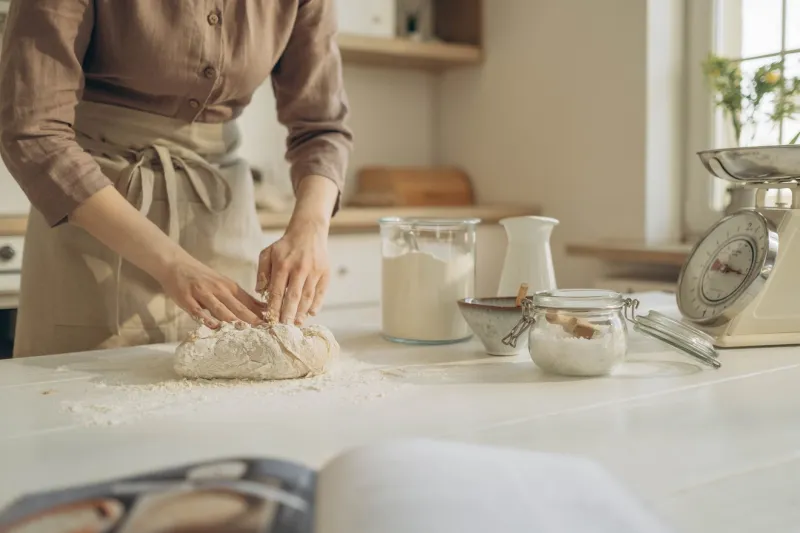
Some people journal. Some people run. Some people sit in silence with a cup of tea and stare at the wall until their thoughts untangle themselves. And then there are the bakers — the ones who reach for a mixing bowl when the world gets heavy, who find something close to peace in the ritual of flour, fat, and a little cold butter.
If you've ever felt genuinely calmer after an afternoon of biscuit baking, you're not imagining it. What you're experiencing has a name, a growing body of research behind it, and a community of home bakers who will absolutely validate everything you're feeling.
Welcome to what some are calling the biscuit therapy effect.
Why Baking Works on the Brain
Food psychologists and occupational therapists have been paying closer attention to baking as a therapeutic activity for years now — and the findings are hard to argue with. The act of baking engages multiple senses simultaneously: you're smelling, touching, listening (yes, biscuit dough has a sound), and watching something transform in real time. That kind of full-sensory engagement pulls your brain away from rumination and anchors it in the present moment.
This is essentially mindfulness, just dressed in an apron.
Dr. Mary McNaughton-Cassill, a psychologist who has studied the relationship between creativity and stress relief, has noted that repetitive, hands-on tasks can activate the same neural pathways as meditation. The rhythmic motion of cutting butter into flour, folding dough, pressing out rounds — these aren't just cooking steps. They're a kind of moving meditation that quiets the mental noise most of us carry around all day.
Biscuit baking, in particular, is almost perfectly designed for this. Unlike bread, which demands hours of waiting and complex fermentation management, biscuits are immediate. You get feedback fast. You feel competent. And that sense of competence — of making something real with your own two hands — matters more than most of us realize.
The Stories Bakers Tell
Ask any devoted home baker about their relationship with biscuit making, and you'll almost always hear some version of the same story: I started baking during a hard time.
Tamara, a middle school teacher from Nashville, started making biscuits every Sunday morning after her divorce. "I didn't set out to make it a ritual," she says. "I just needed something to do with my hands at 6 a.m. when I couldn't sleep. But somewhere in the folding and cutting, I'd start to feel okay again. Like, genuinely okay. By the time they came out of the oven, I'd worked through whatever was sitting on my chest."
Marco, a software developer in Austin, discovered biscuit baking during the early months of the pandemic. "Everything felt out of control," he recalls. "But the dough didn't lie to you. You followed the steps, you got the result. There was something really grounding about that predictability when nothing else felt predictable."
These experiences aren't flukes. They're the biscuit therapy effect in action.
What Makes Biscuits Specifically So Soothing
Not all baking is created equal when it comes to emotional benefit. Decorating elaborate sugar cookies, for instance, can feel more stressful than calming — too much precision, too much room for disappointment. But biscuits have a forgiving, tactile quality that makes them uniquely well-suited for therapeutic baking.
Here's what sets them apart:
The touch factor. Biscuit dough asks you to use your hands. You're pressing cold butter between your fingers, feeling the texture shift, sensing when the dough is ready. This direct physical contact with the ingredients is grounding in a way that using a stand mixer simply isn't. Your nervous system responds to touch, and working with dough gives it something real and immediate to process.
The low-stakes nature of the outcome. Even imperfect biscuits are delicious. They're not going to collapse like a soufflé or weep like a meringue. There's a built-in grace to biscuit baking that allows you to release perfectionism and just be in the process.
The warmth. Ovens are warm. Kitchens smell incredible when biscuits are baking. The sensory comfort of that environment alone has a measurable effect on mood — warm scents like butter and toasted flour have been linked to feelings of safety and nostalgia, which are powerful emotional anchors.
The shareability. Biscuits are almost always made for other people, or at least shared with them. That act of giving — sliding a warm biscuit across the table to someone you love — activates the brain's reward system in a way that's genuinely good for mental health.
How to Build Your Own Biscuit Therapy Ritual
You don't need a therapist's prescription to start. You just need a bowl, some ingredients, and a little intentionality. Here's how to turn your next biscuit baking session into a genuine mindfulness practice:
Set the scene deliberately. Before you measure a single cup of flour, take a moment to clear your counter and your head. Put on music that slows you down — something without lyrics works well. Light a candle if that's your thing. The ritual starts before the baking does.
Leave your phone in another room. This one is non-negotiable. The whole point is presence. Notifications are the enemy of presence.
Work slowly and notice everything. Feel the flour between your fingers. Notice the temperature of the butter. Pay attention to the sound the dough makes when you fold it. Let the sensory experience be the thing you're focused on, not the end result.
Don't chase perfection. Biscuits that are a little lopsided or slightly over-browned still taste like love. Let them be imperfect. Let yourself be imperfect. That's kind of the whole lesson.
Share what you make. Even if it's just leaving a basket of biscuits on a neighbor's porch or bringing them to work on a Monday morning, the act of giving something homemade closes the loop on the therapeutic process. You made something. You gave it away. That's a complete, meaningful thing.
The Dough Knows What You Need
There's an old saying among experienced bakers: the dough knows. It knows when you're rushing. It knows when you've handled it too much. It responds to your energy in ways that are almost uncanny.
But here's the flip side of that — the dough also meets you where you are. It doesn't judge a bad day or a messy counter or hands that are shaking a little from stress. It just asks you to show up, press in, and work through it.
Maybe that's why so many people find their way to the kitchen when life gets hard. Not because baking fixes anything, exactly. But because there's something deeply human about making food with your hands — about taking raw, separate things and turning them into something warm and whole.
That's what biscuits have always been. Comfort made tangible. A small, golden proof that even on the hardest days, you can still create something good.
So the next time you're carrying something heavy, consider reaching for the flour instead of your phone. Your hands already know what to do.