Layers of Obsession: How Artisan Bakers Are Leaving Sourdough Behind to Chase the Perfect Laminated Biscuit
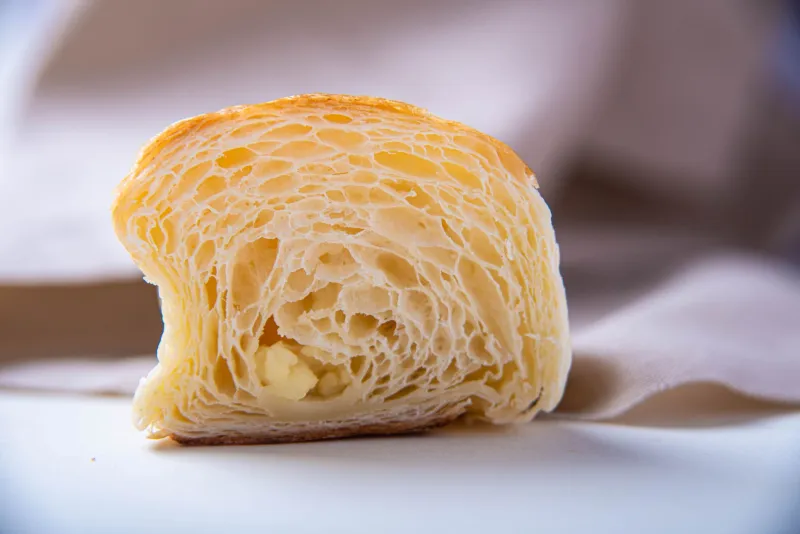
For the better part of a decade, sourdough was the ultimate flex in the artisan baking world. Bakers nurtured their starters like beloved pets, posted crumb shots on Instagram like proud parents, and debated hydration percentages with the intensity of sports fans arguing over playoff brackets. But something has quietly shifted. Across home kitchens and small-batch bakeries from Portland to Asheville, a new obsession is taking hold — and it involves a whole lot of butter, a very cold work surface, and a technique that's been hiding in plain sight for generations.
Laminated biscuits are having their moment. And the bakers who've caught the bug say there's no going back.
So What Even Is a Laminated Biscuit?
If you've ever pulled apart a croissant and marveled at those tissue-thin, buttery layers, you already understand the basic principle. Lamination is the process of folding fat into dough repeatedly to create distinct, paper-thin strata. When heat hits those layers in the oven, the butter releases steam, and the layers puff apart into something that's genuinely breathtaking — crispy on the outside, cloud-soft and honeycombed on the inside.
Traditional biscuit recipes rely on cutting cold butter into flour, which creates flakiness through a different mechanism. Lamination takes that idea and cranks it up to eleven. Instead of scattered butter pockets, you're engineering precise, intentional layers — sometimes dozens of them — through a disciplined series of folds called a "letter fold" or a "book fold."
The result? A biscuit that practically shatters when you pull it apart. A biscuit with visible, defined layers you can actually count. A biscuit that makes people stop mid-bite and say, what did you do to this?
Why Bakers Are Walking Away from the Starter
Here's the thing about sourdough: once you've dialed in your process, it becomes a routine. A beautiful, satisfying routine — but a routine nonetheless. Feed the starter, mix the dough, stretch and fold, long ferment, score, bake. There's deep craft in it, no question. But for a certain type of baker — the kind who thrives on technical puzzles and gets a little restless once they've mastered something — sourdough eventually stops asking hard questions.
Laminated biscuits ask hard questions every single time.
Temperature is everything. If your butter gets too warm during the folding process, it absorbs into the dough instead of staying in distinct layers, and you lose the whole effect. Too cold, and the butter shatters rather than bends, tearing through your dough instead of spreading smoothly through it. You're chasing a very specific window — firm enough to hold its shape, pliable enough to fold without breaking — and that window changes depending on your kitchen temperature, your flour, even the humidity in the air.
For bakers who love that kind of challenge, it's genuinely thrilling.
"Sourdough taught me patience," says one home baker from Nashville who's been experimenting with lamination for the past year. "Laminated biscuits are teaching me precision. It's a completely different skill set, and I'm hooked."
The Technique, Broken Down
If you want to try your hand at lamination, here's the basic framework to get you started.
Start cold and stay cold. This is the golden rule. Chill your flour, chill your bowl, chill your butter. Some bakers even chill their work surface. The moment butter starts to soften is the moment your layers start to disappear.
Use a block of butter, not grated or cubed. Lamination calls for a flat, even "butter packet" that you can roll into the dough. You can create this by beating cold butter between sheets of parchment into a thin, even slab — roughly the size of a playing card.
Make your dough, rest it, then laminate. Mix a simple biscuit dough — flour, baking powder, salt, a little buttermilk — and let it rest briefly in the fridge. Then roll it out, place your butter slab in the center, fold the dough over it like an envelope, and begin your folds. A standard approach involves three to four letter folds, with a chill in the fridge between each one.
Cut straight down, no twisting. This applies to regular biscuits too, but it's even more critical here. Twisting a cutter seals the edges and prevents your layers from opening up during baking. Press straight down, lift straight up.
Bake hot. A 425°F to 450°F oven gives the layers the quick burst of steam they need to puff and separate dramatically.
Where Bakers Are Taking It Next
Once you've got the basic lamination down, the creative possibilities open up fast — and this is where things get genuinely exciting.
Some bakers are incorporating flavored butters into the lamination process: herb compound butters, miso butter, smoked cheddar butter. Each fold carries those flavors through every single layer, so you get a complexity in every bite that a standard biscuit just can't match.
Others are playing with the fold count itself. More folds mean more layers but also a more delicate, almost pastry-like texture. Fewer folds keep the biscuit heartier and more rustic. Finding your preferred fold count is part of developing your own lamination signature.
There's also growing experimentation with alternative fats. While European-style high-fat butter is the gold standard, some bakers are laminating with leaf lard for a more old-school Southern flavor profile, or even experimenting with cultured butter for a subtle tang that plays beautifully against a honey drizzle.
The Biscuit as a Canvas for Serious Craft
What's really driving this shift, if you dig a little deeper, is about more than just technique. It's about the biscuit finally getting the respect it deserves as a vehicle for serious culinary artistry.
Sourdough had its cultural moment partly because it looked impressive — those dramatic scores, that open crumb, the dark blistered crust. Biscuits have always been associated with comfort and simplicity, which is genuinely part of their charm. But laminated biscuits are quietly making the case that a biscuit can be both deeply comforting and technically extraordinary. That it can sit on a fine-dining brunch menu right next to a croissant and hold its own.
At Little Biscuits, that's a story we've always believed in. The biscuit has never needed to be anything other than what it is — honest, warm, made with real ingredients and real care. But there's something wonderful about watching skilled bakers discover that there's so much more depth to explore inside that simple, golden square.
Ready to Try It Yourself?
Laminated biscuits have a reputation for being intimidating, and honestly, your first batch might not be perfect. You might lose your layers. Your butter might get away from you. That's completely fine — and it's part of what makes the process so satisfying once it clicks.
Start with a small batch. Work quickly. Keep everything cold. And when you pull that first tray out of the oven and see those distinct, defined layers pulling apart on their own — that little miracle of steam and fat and flour doing exactly what you engineered them to do — you'll understand why bakers are calling this the most addictive thing they've made in years.
Sourdough will always have a place in the artisan baker's heart. But right now, the most exciting thing happening in craft baking fits in the palm of your hand, pulls apart in a cloud of steam, and tastes like everything a biscuit was always meant to be.