Hot, Cold, and Everything In Between: The Temperature Secrets Behind Truly Great Biscuits
Here's a truth that took most of us too long to learn: biscuit baking isn't just about the recipe. It's about conditions. The same ingredients, the same bowl, the same pair of hands — and you can get wildly different results depending on whether your kitchen is 65°F or 85°F, whether your butter came straight from the fridge or sat out for twenty minutes, or whether your oven runs hot (and most of them do).
Temperature isn't a footnote in biscuit baking. It's the whole story.
Why Cold Butter Is Non-Negotiable
Let's start at the beginning — with the fat. You've probably seen a dozen recipes insist on cold butter, and maybe you've wondered if that's just baking snobbery. It's not. It's physics.
When you work cold butter into flour, it doesn't fully incorporate. Instead, it breaks into small, irregular pieces — some as big as a pea, some as small as a crumb. Those little pockets of solid fat are your future layers. When they hit the oven's heat, the water inside the butter turns to steam, and that steam pushes the dough upward and outward, creating the flaky separation that makes a biscuit worth tearing apart.
Warm butter, on the other hand, blends smoothly into the flour. The result? A dough that bakes up dense and uniform — more like a thick cracker than a proper biscuit. Some people call these "shortbread-style" biscuits to be polite. Most of us just call them disappointing.
The fix is simple but requires intention. Cut your butter into cubes and pop them back in the freezer for 10 to 15 minutes before you start. If your kitchen runs warm — hello, summer baking — chill your mixing bowl too. Even your flour can go in the freezer for a bit. The goal is to keep everything cold enough that the butter stays in distinct pieces right up until it hits the oven.
The Liquid Temperature Equation
Butter gets all the attention, but your liquid matters just as much. Buttermilk, whole milk, cream — whatever your recipe calls for — should be cold. Not ice-cold to the point of being slushy, but straight-from-the-fridge cold.
Warm liquid activates gluten development faster, which means more mixing equals more toughness. Cold liquid slows that process down, giving you a little more margin for error as you bring the dough together. It also helps keep those precious butter pieces from melting prematurely.
One trick worth trying: add a few ice cubes to your liquid measuring cup and let it sit for a minute, then pour off just the liquid. You'll get perfectly chilled buttermilk every time without any guesswork.
Your Hands Are Warmer Than You Think
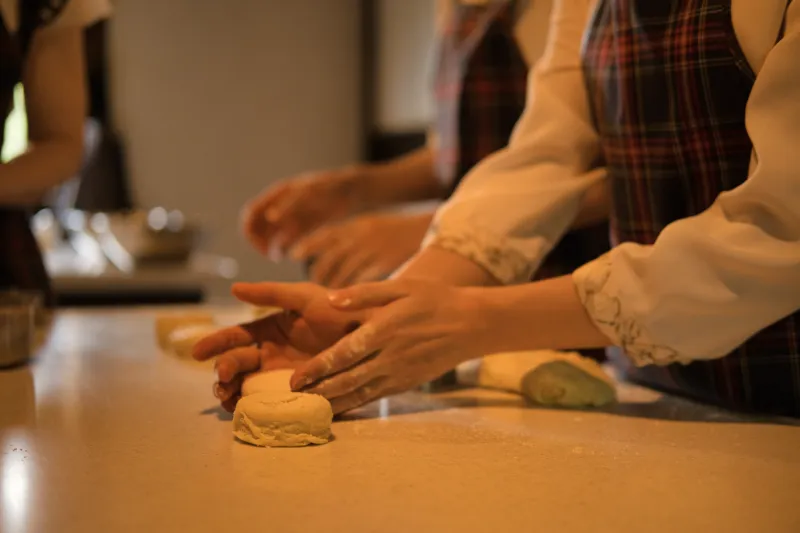
This one's humbling, but it needs to be said. Human hands hover around 98°F. That's more than enough to soften butter in seconds. If you've ever noticed your biscuit dough getting greasy or sticky the longer you work it, your hands are the culprit.
The solution is to work fast and touch the dough as little as possible. Use a pastry cutter, a fork, or even a box grater to work the butter into the flour instead of your fingers. Some bakers swear by using their knuckles rather than their palms, since knuckles tend to run a little cooler. Others keep a bowl of ice water nearby to cool their hands between steps.
The less body heat you transfer to the dough, the better your layers will be. It really is that direct.
Oven Temperature: Where Most Home Bakers Go Wrong
Here's an uncomfortable reality: your oven probably doesn't run at the temperature it claims. Studies suggest that the majority of home ovens are off by at least 25°F, and many are off by 50°F or more. That's a massive variable when you're trying to nail a recipe.
For biscuits, oven temperature is everything. The ideal range for most recipes sits between 425°F and 450°F. That high heat is intentional — it needs to be hot enough to create rapid steam from the butter before the exterior sets, which is what gives you lift and those gorgeous layers. A too-cool oven lets the butter melt slowly into the dough before the steam can do its work, and you end up with flat, greasy biscuits.
Invest in an oven thermometer. They cost less than five dollars at most grocery stores and they'll immediately tell you whether your oven is lying to you. Place it on the center rack and preheat for at least 20 minutes before baking — most ovens take longer than their preheat signal suggests to actually reach and stabilize at temperature.
Also worth noting: oven hot spots are real. Rotating your baking sheet halfway through the bake time can mean the difference between evenly golden biscuits and a tray where half are pale and half are overdone.
The Resting Period Nobody Talks About
Once your biscuits are cut and ready to bake, there's a brief window that most recipes skip right over: the rest. Giving your shaped biscuits 10 to 15 minutes in the refrigerator before they go into the oven can make a noticeable difference in rise and texture.
Why? Because cutting and shaping — even when done quickly — generates a little warmth and stress in the dough. That rest period lets the gluten relax and the butter firm back up. When those chilled biscuits hit the hot oven, the contrast is sharper, the steam more dramatic, and the rise more pronounced.
It's a small step that feels almost too easy to matter. But once you try it, you'll have a hard time skipping it.
Putting It All Together
Perfect biscuits aren't magic — they're a chain of temperature decisions, each one building on the last. Cold butter. Cold liquid. Cool hands. A screaming-hot, accurately calibrated oven. A quick rest in the fridge before baking. None of these steps are complicated, but together they create the conditions that make the difference between biscuits that are fine and biscuits that make people ask for the recipe.
Once you start thinking about temperature as an active ingredient rather than a background detail, something clicks. Your biscuits get more consistent. Your troubleshooting gets easier. And that satisfying pull-apart moment — layers separating like pages in a book — starts happening every single time.
That's the science. And honestly? It's kind of beautiful.