Know Your Worth: A Home Baker's Real-Talk Guide to Pricing Biscuits for Sale or Gifting
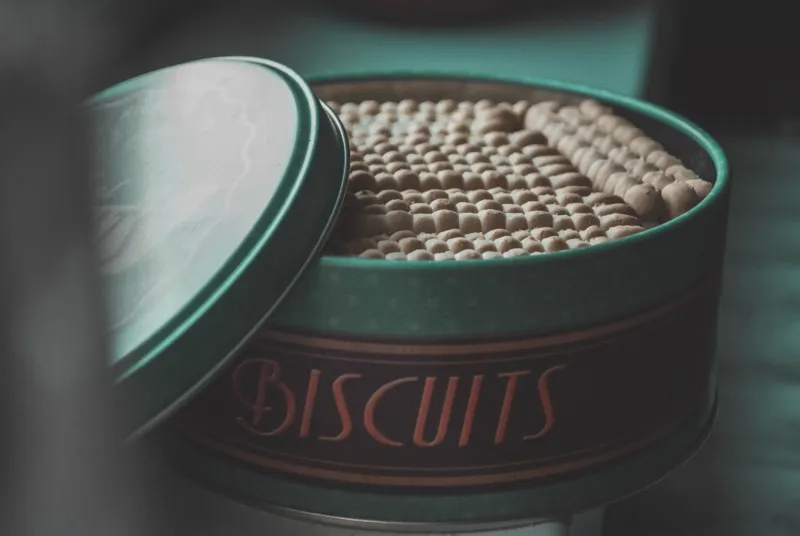
Something funny happens when home bakers start thinking about selling their biscuits. They'll confidently quote a dozen eggs or a pound of butter to the penny, then turn around and offer a full tray of hand-crafted biscuits for whatever feels "reasonable" — which usually means way too little. It's not a math problem. It's an emotional one.
If you've ever handed over a box of homemade biscuits and privately wondered whether you even broke even, this one's for you.
Start With What You Actually Spend
Before you can price anything fairly, you need to know your real ingredient costs — not a rough guess, but actual numbers. Pull out your last few grocery receipts and start tracking.
For a standard dozen buttermilk biscuits, a typical ingredient list might include all-purpose flour, butter, buttermilk, baking powder, salt, and maybe a little sugar. When you break those down by the amount used per batch — not the full package price — you'll usually land somewhere between $2.50 and $5.00 in raw ingredients, depending on your market and whether you're buying store-brand or premium products.
That sounds cheap, right? Here's where most bakers stop the math. Don't.
Add in your packaging: a bakery box, tissue paper, a sticker or label, and a ribbon or twine can easily run another $1.50 to $3.00 per order, especially if you're buying in small quantities. If you're shipping, that number climbs significantly. Factor in any consumables too — parchment paper, cooking spray, the foil you wrap things in.
Now you're closer to your true cost of goods.
The Part Everyone Forgets: Your Time
This is where the emotional math gets complicated. Many home bakers mentally separate their time from their pricing because baking is something they love. But here's the thing — love doesn't pay for flour.
Time yourself through a full biscuit batch from start to finish: prep, mixing, shaping, baking, cooling, packaging, and any cleanup. For most people, a dozen biscuits takes 60 to 90 minutes when you count everything. If you're making multiple batches for an order, that time multiplies.
What's a fair hourly rate for your skilled labor? The federal minimum wage is $7.25, but skilled food production work commands more — $15 to $20 per hour is a reasonable starting point for most markets. Some bakers in higher cost-of-living cities charge more.
If a batch takes 75 minutes and you value your time at $15 per hour, that's $18.75 in labor alone. Add your ingredient and packaging costs, and you're already at $22 to $26 before any profit margin.
Understanding Markup and Margin
In the food industry, a standard markup is typically 2.5 to 3 times the cost of goods — meaning if your ingredients and packaging cost $5.00, you'd price the product at $12.50 to $15.00. But that formula is built for businesses with commercial kitchens, bulk purchasing power, and employees whose wages are already baked into overhead.
As a home baker, you're working with smaller batches and higher per-unit costs. A more honest approach is to calculate your total cost (ingredients + packaging + labor) and then add a modest profit margin of 20 to 30 percent.
Using our example above: $26 in total cost plus 25% margin = $32.50 for a dozen biscuits. That might feel high if you've been charging $12, but compare it to what a local artisan bakery charges — often $3 to $5 per individual biscuit, which puts a dozen at $36 to $60. Suddenly your pricing looks entirely reasonable.
Research Your Local Market
Before you finalize any prices, spend a Saturday morning doing a little field research. Visit your local farmers market and see what other bakers are charging. Check Etsy listings for baked goods in your state. Look at bakery menus in your area.
You're not trying to undercut anyone — you're trying to understand what buyers in your community already expect to pay. In some markets, $28 for a dozen handmade biscuits is a totally normal transaction. In others, the same buyers might need a little education about why handmade costs more than the grocery store.
Don't be afraid to tell your story. Customers who understand that your biscuits are made in small batches, with quality ingredients, by a real person who cares, are much more likely to pay a fair price — and come back.
Gifting Isn't Free Either
If you're giving biscuits as client gifts, holiday packages, or thank-you tokens rather than selling them outright, the pricing conversation shifts slightly — but it doesn't disappear. You still need to know your cost per unit so you can budget appropriately and make sure your generosity is intentional rather than accidental.
A good rule of thumb: treat gifted biscuits the same way you'd treat any business expense. Set a per-gift budget, calculate your actual costs, and stay within it. If a beautiful box of a dozen biscuits costs you $20 to produce, that's a $20 gift — and a genuinely meaningful one.
For client gifting especially, consider whether you can offset costs by buying packaging in bulk, simplifying your recipe slightly, or batching production across multiple gifts at once.
Protecting Your Joy
There's one more thing worth saying out loud: chronic underpricing is exhausting. When you consistently sell or give away your work for less than it costs you — in money, time, or energy — baking stops feeling like something you love and starts feeling like something you resent.
Fair pricing isn't greed. It's sustainability. It's what allows you to keep doing the thing you love, keep buying good butter, and keep showing up at the farmers market every Saturday with a smile.
You made something with your hands. Something that makes people happy. That has real value — and you deserve to be compensated accordingly.