Grandma's Hands Knew Best: How Home Bakers Are Finally Giving Kitchen Legends the Recognition They Deserve
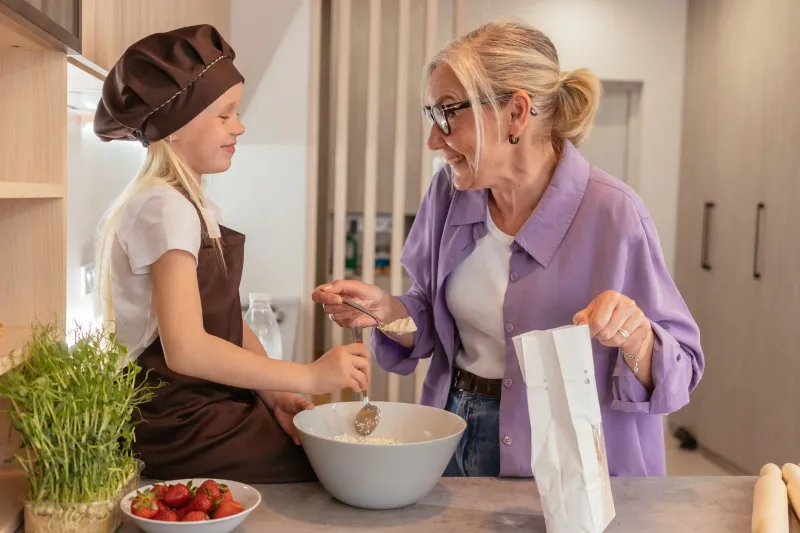
There's a particular kind of knowing that lives in the hands. It's the way a grandmother cups a mound of dough without measuring, presses her knuckles into butter-flecked flour, and somehow—every single time—produces biscuits that taste like Saturday morning and everything good about being young. That knowledge was rarely written down. It was watched, absorbed, inherited.
But something is shifting. Across kitchen tables and comment sections, in family group chats and food blogs, home bakers are finally saying out loud what they've always felt in their hearts: the women who taught them to bake deserve to be remembered. Not just in passing, but loudly and on the record.
The Women Who Never Got a Cookbook Deal
Let's be honest about something. The most extraordinary biscuit makers most of us have ever encountered never appeared on a cooking show. They didn't have a newsletter or a verified social profile. They had a cast iron skillet, a particular way of folding dough, and a kitchen that always seemed to smell like something wonderful was either happening or about to.
For decades, that expertise stayed local—passed down in fragments, demonstrated rather than explained, and often taken for granted until it was almost too late to capture. The women behind those biscuits were mothers, grandmothers, great-aunts, church ladies, and neighbors. Their contributions fed families, anchored holidays, and shaped the palates of entire generations. And yet, until recently, most of them went uncredited.
That's starting to change in meaningful, lasting ways.
Documenting Before It's Too Late
Sarah Delacroix, a home baker from Baton Rouge who runs a small food blog focused on Southern comfort cooking, spent three weekends last spring sitting at her grandmother Mee-Maw Claudette's kitchen table with her phone propped against a coffee mug. "I just started recording everything," she says. "I'd ask her to make the biscuits like she always does, and I'd film her hands. I asked her questions she'd never been asked before—why she uses White Lily flour, how she knows when the butter is cold enough, why she folds instead of kneads."
What Sarah captured wasn't just a recipe. It was a philosophy. Claudette, now 84, had opinions about everything from oven temperature to the angle of the biscuit cutter. "She told me, 'You twist it and they won't rise right.' I'd been twisting my whole life," Sarah laughs. "No wonder mine were never quite as good."
Sarah published the videos across several installments on her blog, crediting her grandmother by full name and including a short biography alongside each post. The response was overwhelming. Readers flooded the comments with their own stories—memories of watching someone they loved work dough at a counter, of trying and failing to replicate a biscuit that existed only in muscle memory.
Social Media as a Memory Keeper
What's fascinating about this moment is that social media, often criticized for being shallow or fleeting, is actually functioning as a pretty remarkable preservation tool for food heritage. TikTok, Instagram Reels, and YouTube are full of videos where adult children and grandchildren film their elders mid-bake, asking questions and capturing techniques that would otherwise disappear.
The hashtags tell the whole story. #GrandmasRecipe, #TeachMeToMake, #FamilyRecipes—these aren't just nostalgic content. They're acts of documentation. And the engagement they generate suggests that millions of people feel the same quiet urgency: get it down before it's gone.
Marcus Webb, a home baker from Atlanta who started filming his late mother's cooking techniques before she passed two years ago, now shares those videos regularly as a way of keeping her presence alive. "Every time I post one of her biscuit videos, I get messages from people saying they wish they'd done the same thing," he says. "That's why I keep sharing them. It's a reminder."
Marcus has since started what he calls a "kitchen legacy project" in his community—encouraging neighbors to record their elders cooking and then sharing those videos at a monthly potluck where the dishes are made from the documented recipes. It's part archive, part celebration, part grief ritual.
Family Cookbooks as Acts of Love
Beyond social media, a quieter but equally powerful movement is happening in the form of self-published family cookbooks. Services like Chatbooks and Mixbook, originally built for photo albums, have become popular tools for families compiling recipe collections as heirlooms.
These aren't polished productions. They're full of handwritten notes scanned from index cards, photos of biscuits that are slightly lopsided but obviously delicious, and headnotes that read less like editorial copy and more like love letters. "My Aunt Dottie never measured anything, so I've done my best to estimate. Start with these amounts and adjust until it feels right—you'll know." That kind of instruction, imprecise and deeply human, is exactly what gets lost when recipes are standardized for publication.
Jenna Kowalski, a graphic designer from Columbus, Ohio, spent six months assembling a family cookbook as a Christmas gift for her extended family after her grandmother's passing. The biscuit section alone runs twelve pages, including three variations her grandmother made depending on the season and what was in the fridge. "People cried when they opened it," Jenna says. "Not sad crying—grateful crying. Like they'd been given something back."
Honoring the Mentor Through the Bake
For many home bakers, the most meaningful tribute isn't a video or a cookbook. It's simply making the biscuits. Regularly. Intentionally. With the same care and attention that was modeled for them.
There's something deeply powerful about standing in your own kitchen and consciously connecting what your hands are doing to what you watched someone else's hands do years ago. It's a form of remembrance that's also a form of practice—keeping the knowledge alive by using it.
Some bakers have started including small dedications in their baking. A handwritten card tucked into a tin of biscuits gifted to a neighbor. A note in a recipe shared online that reads: "This one belongs to my grandmother, Lena Mae, who made these every Sunday for forty years."
These gestures are small, but they accumulate into something significant. They build a record. They insist that the knowledge and the person who carried it are worth remembering.
What We Owe the Kitchen Keepers
At Little Biscuits, we believe that every biscuit tells a story. And the most important stories are often the ones that almost didn't get told—the ones held in the hands of women who never thought of themselves as teachers, only as people who loved their families and knew how to feed them well.
If there's someone in your life whose biscuits have always been better than yours, whose technique you've admired from across the kitchen counter, we'd gently encourage you to do one thing: ask them to show you. Film it if you can. Write it down. Ask the questions that feel too obvious or too small—because those are often the most important ones.
The biscuits are the point, yes. But they're also the vehicle. What's really being passed down is time, attention, and love in one of its most honest forms. That deserves to be documented, celebrated, and credited—by name.