Flour, Family, and FaceTime: How Gen Z Is Bringing Grandma's Biscuit Recipes Back to Life
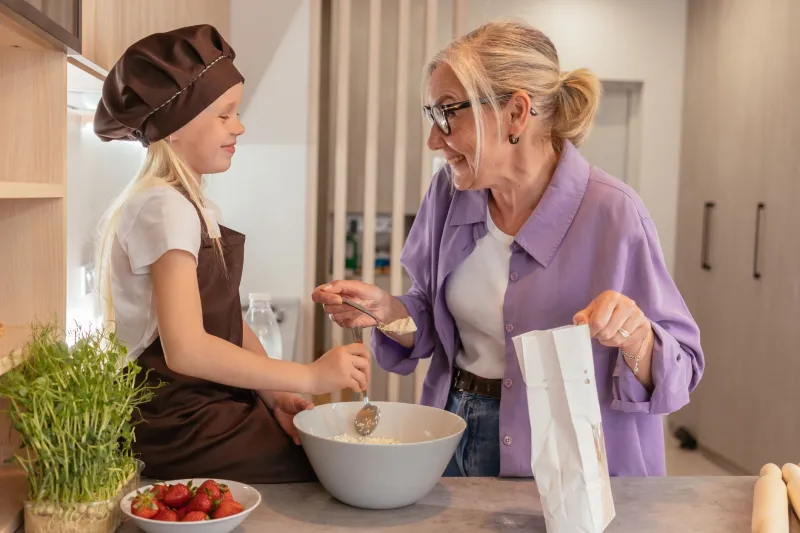
There's a worn index card sitting on Maya Thornton's kitchen counter in Portland, Oregon. The handwriting is shaky and slanted, the ink faded to a soft brown. At the top, in her grandmother's looping script, it reads simply: Mama's Biscuits — Don't Overmix. Maya, 24, found it tucked inside a church cookbook her grandmother mailed her last Christmas. She photographed it, posted it to TikTok, and woke up the next morning to 80,000 views.
"I honestly cried a little," she admits. "People were tagging their own grandmas in the comments. It turned into this whole thing."
That whole thing, it turns out, is a full-blown cultural moment.
Why Biscuits? Why Now?
Food trends come and go, but the current wave of young home bakers reaching back toward traditional scratch baking feels different — less like a trend and more like a reckoning. After years of convenience culture, meal kits, and two-tap food delivery, something shifted. The pandemic sent millions of people into their kitchens with nowhere else to go, and a lot of them stayed.
But it's not just about boredom. Younger generations are increasingly vocal about wanting to feel grounded — connected to place, to family, to something tangible in a world that often feels abstract. And few things are more tangible than pressing your hands into a bowl of cold butter and flour.
Biscuits, in particular, carry a kind of emotional weight that sourdough or croissants simply can't replicate. They're woven into the fabric of American family life — Sunday morning tables, holiday breakfasts, the smell of something warm coming out of the oven when you walk through the door after a long drive home. They're not fancy. That's exactly the point.
"My grandmother's biscuits tasted like safety," says Jordan Ellis, 27, from Nashville. "I wanted to learn how to make that feeling, not just buy it."
The Recipe Card Goes Viral
Scroll through #GrandmasBiscuits on any major social platform and you'll find thousands of posts — some polished, most wonderfully rough around the edges. Shaky phone cameras propped against spice racks. Flour-dusted countertops. Grandmothers appearing on FaceTime screens, gesturing at dough with the authority of someone who has never once measured a cup of flour in their life.
That improvisational quality is part of the appeal. Traditional biscuit recipes weren't written for precision. They were written — or more often, just remembered — for feel. A handful of this, enough of that, bake until it looks right. For a generation raised on exact measurements and step-by-step YouTube tutorials, learning to bake by instinct is genuinely revolutionary.
Ashley Nguyen, 22, spent three weekends on FaceTime with her grandmother in rural Georgia before she finally got the drop biscuits right. "She kept telling me the dough should feel like an earlobe," Ashley laughs. "I had no idea what that meant. Now I totally do."
The process itself — the back-and-forth, the failed batches, the long phone calls — has become as meaningful as the finished product.
What Grandmothers Know That Cookbooks Don't
Here's the thing about traditional biscuit wisdom: a lot of it didn't make it into print. It lived in hands and muscle memory and the particular way someone's grandmother held her wrist when she cut the fat into the flour. The knowledge was passed down through proximity, through standing beside someone at a counter and watching.
When families scattered — to cities, to different states, to different countries — that proximity disappeared. Recipes got simplified or lost entirely. And now, decades later, a generation that never stood beside those grandmothers in the kitchen is trying to reconstruct what was almost forgotten.
Some of what they're recovering is surprisingly nuanced. Regional flour preferences (White Lily flour, milled from softer winter wheat, is practically sacred in the South). The temperature of butter — not just cold, but freezer cold, grated on a box grater. The way the oven should be screaming hot before the pan ever goes in. The wisdom that overworked dough is ruined dough, and that knowing when to stop is the whole skill.
None of that fits neatly into a recipe card. But it fits perfectly into a two-hour phone call.
Baking as a Bridge
What strikes many of the bakers we talked to is how much the biscuit-making itself has become secondary to the connection it creates. The recipe is almost a pretext — a reason to call, a shared project, a way to feel close to someone you can't easily hug.
For Maya in Portland, making her grandmother's biscuits every Sunday has become a kind of ritual. "I send her a photo every week," she says. "She critiques them. Last week she told me my edges were too rough. She was right."
For Jordan in Nashville, learning to make biscuits from scratch prompted him to start a family recipe archive — scanning old cards, recording voice memos with his grandmother talking through techniques, building something that will outlast all of them.
"I realized I was almost too late," he says quietly. "My grandmother is 84. Some of this stuff exists only in her head. Biscuits gave me a reason to go get it."
A Few Things to Try at Home
If this is making you want to call your grandmother — or whoever in your family holds the biscuit knowledge — do it. Do it today. But if you're starting from scratch, here are a few principles the grandmothers we spoke with agreed on:
- Keep everything cold. Cold butter, cold buttermilk, cold hands if you can manage it. Warmth is the enemy of flakiness.
- Work fast and work light. The less you handle the dough, the more tender the biscuit. Mix until it just comes together and stop.
- Trust your hands more than your timer. Ovens vary. Learn what done looks like and smells like in your kitchen.
- Don't be precious about imperfection. Rustic is the whole aesthetic. A lopsided biscuit made with love beats a perfect one made with anxiety every single time.
The biscuit renaissance isn't really about biscuits. It's about what we almost let slip away — and the quiet, flour-dusted work of getting it back.