Before the Recipe Is Gone: A Practical Guide to Capturing Your Family's Biscuit-Making Secrets
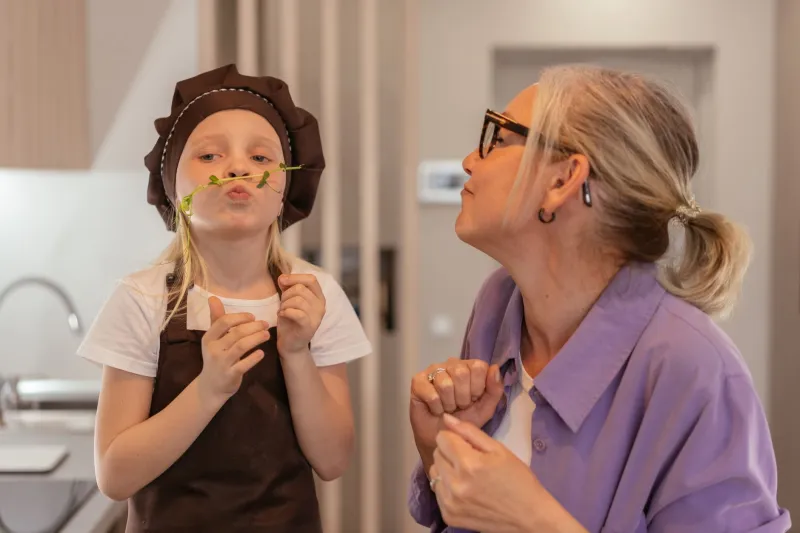
Somewhere in America right now, there's a woman in her eighties who makes the best biscuits anyone in her family has ever tasted. She's been making them for sixty years. She doesn't use a recipe card. She doesn't measure the flour — she just knows. Her grandchildren have watched her do it a hundred times, but none of them could replicate it alone. Not yet.
Maybe that woman is your grandmother. Maybe she's your great-aunt, or a neighbor who became family, or a parent who learned from their parent and never thought to write any of it down. The knowledge lives in their hands, their instincts, their muscle memory — and it is heartbreakingly fragile.
This article is about what you can do right now, today, to make sure it doesn't disappear.
Why Biscuit Recipes Are Uniquely Hard to Preserve
Biscuit-making is one of those crafts that resists documentation almost by nature. Unlike a cake recipe, which tends to be precise and chemistry-dependent, a great biscuit often comes together through feel. The baker knows when the butter is cut in enough. They know what "shaggy" dough actually looks like in person versus in a photo. They know the exact moment to stop mixing.
When you ask an experienced baker to write down their recipe, what you often get is a framework — "about two cups of flour, a good pinch of salt" — with all the important judgment calls left out entirely. Not because they're withholding anything, but because those details are so automatic they don't even register as information anymore.
Your job as the family archivist is to capture what they can't see themselves.
Start with a Conversation, Not a Camera
Before you pull out your phone to record anything, sit down and talk. Make a cup of coffee. Ask open-ended questions and let the stories come before the instructions do.
Good questions to start with:
- "Where did you first learn to make biscuits?"
- "Who taught you, and what do you remember about watching them?"
- "Is there anything about your biscuits that you think makes them different from other people's?"
- "Has the recipe changed over the years?"
- "Is there anything you do that you've never seen anyone else do?"
These conversations often surface the most important details — the lard that was swapped for butter during a lean year and stayed, the extra fold that someone's mother-in-law taught them, the way they always let the dough rest while the oven finishes preheating. Context makes a recipe human. It also makes it reproducible.
Record the conversation on your phone with permission. You don't need fancy equipment — just good audio and a quiet room.
The Bake-Along Documentation Method
The single most effective way to capture an experienced baker's process is to bake alongside them while documenting every step in real time. Here's how to make the most of it:
Bring measuring tools to them. When they scoop flour, measure it after they do. When they add salt, pour it into a measuring spoon and note the amount. You're not correcting them — you're translating their intuition into numbers that someone else can follow later.
Film their hands. The hands tell the story. Set up your phone on a stand or ask someone else to hold it, and focus on what their hands are doing. The way they cut in the fat, how they fold the dough, how firmly they press the cutter down — all of this is information that words alone can't fully convey.
Ask "why" at every step. "Why do you add the buttermilk all at once?" "Why do you use a fork instead of a pastry cutter?" "Why do you put the biscuits touching each other on the pan?" The answers to these questions are often where the real recipe lives.
Note the sensory cues. Ask them to describe what they're looking for at each stage. "What does the dough feel like when it's ready?" "What does it look like when the fat is cut in enough?" "How do you know they're done baking?" Document these descriptions word for word.
Building a Recipe That Future Bakers Can Actually Use
Once you've gathered your notes, video, and measurements, the work of translation begins. The goal is to write a recipe that captures both the precision a new baker needs and the spirit of the original.
A few things to include that most recipe cards leave out:
- Ingredient temperatures. Cold butter? Room temperature buttermilk? This matters enormously and experienced bakers often don't mention it because they do it automatically.
- Visual and tactile cues. Instead of just "mix until combined," write "mix until the dough just comes together and still looks a little rough — stop here even if it seems underdone."
- The baker's own words. Include a few direct quotes in the recipe notes. "Grandma always said the dough should feel like a baby's cheek" is worth more than a paragraph of technical description.
- The story. Even a short paragraph about where the recipe came from and why it matters gives future bakers something to hold onto.
Creating a Family Baking Archive
A single documented recipe is a treasure. A full family baking archive is a legacy.
Consider creating a shared digital folder — Google Drive works well — where you store video recordings, written recipes, photos of the baker in action, and any original handwritten cards or clippings. Label everything clearly with names, dates, and locations.
For a more tangible keepsake, a printed baking journal or small self-published cookbook (services like Blurb or Shutterfly make this surprisingly affordable) can become one of the most meaningful gifts a family passes down. Include photos of the baker, photos of the finished biscuits, and the stories behind both.
If you're working with an older relative who is comfortable on video, consider recording a longer "baking story" session where they talk about their history with food, family, and kitchen memories. These recordings become irreplaceable over time.
Don't Wait for the Right Moment
This is the part nobody wants to say out loud, but it has to be said: the right time to do this is now. Not at the next holiday. Not when things slow down. Now.
Call the person whose biscuits you've been meaning to document. Ask if you can come over and bake together. Bring your measuring cups, your phone, and your questions. Let the afternoon run long.
The recipe you capture might not be perfect on the first try. It might take two or three bake-alongs to get all the details right. That's fine — those afternoons are the point. The flour on the counter, the stories over coffee, the moment you finally understand why she always uses that particular pan — that's the inheritance. Write it all down.